Photographing Butterflies: Don’t Let the Butterfly Flutter By!
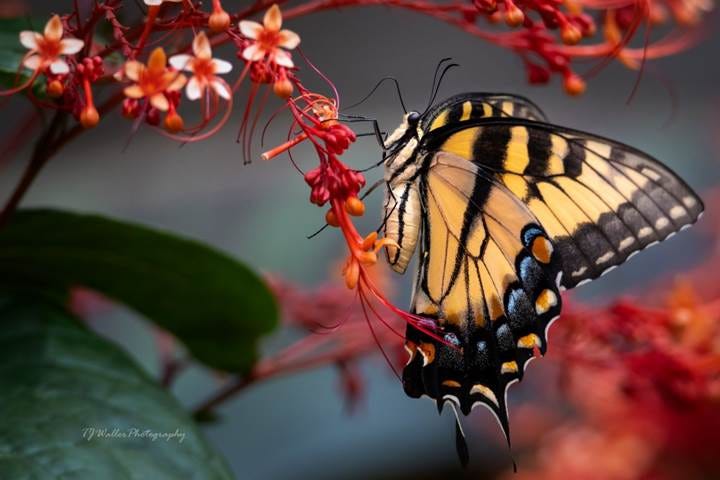
A captivating sight for children and adults alike, I’ve never seen anyone who didn’t stop to watch a beautiful butterfly as it fluttered on by. So, in this short article I’ll share a few tips on photographing butterflies and how to capture truly awesome, wall-hanging shots of these gorgeous insects.
SEND OUT BUTTERFLY INVITATIONS
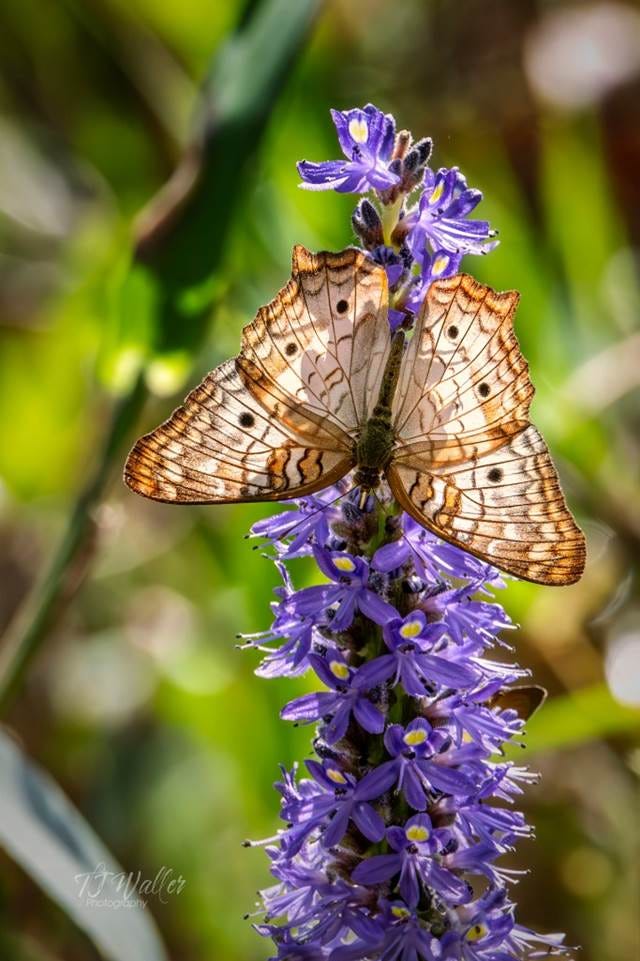
Since butterflies do not mind human presence, the best way to get great photos of them is to invite them to your yard or balcony! I use the same plants that attract hummingbirds to bring in the butterflies. A simple Google search on “what flowers attracts butterflies” will help you in your search for the perfect flowers for your yard or balcony situation.
Here is a downloadable PDF of all the usual butterflies you’ll encounter in Florida and the flowers they like!
CAMERAS
Photographing butterflies is actually relatively easy. Some are quick and quirky, but most just find a flower, light, feed, and move on to the next flower. You can even use your phone, but if you plan on printing your shots larger than an 8×10 or so, then you won’t be happy with the results. The small sensors on phone cameras don’t allow for larger prints. Point-and-shoot, DSLR, and mirrorless cameras, however, work great!
SETTINGS
Shutter Speed
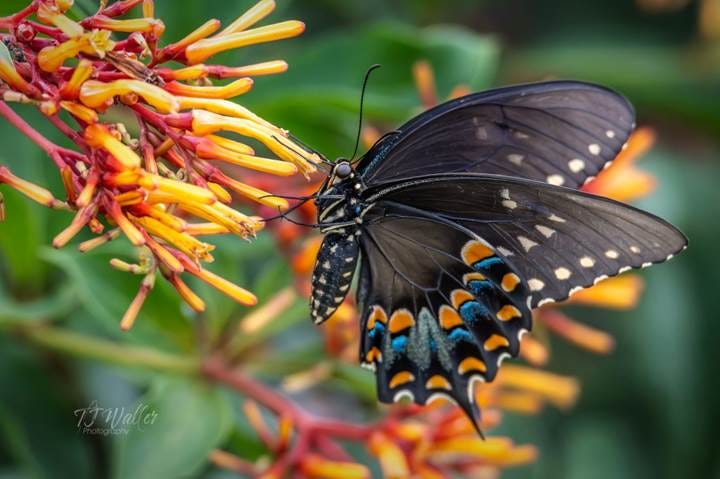
Remember, the faster the shutter speed, the cleaner the photo will be. Does every shot need a 1/1000 second speed? Of course not. But if the light allows it, then it sure doesn’t hurt! When choosing a starting shutter speed, it’s always safe to start faster, then slow it up as you shoot to try to get different “looks.” A slower shutter allows for more wing blur. Personally, I like to completely stop my butterflies in motion when they are on the flower. They aren’t flying, they’re feeding. So I don’t need to show motion. When it comes to trying to get them flying from one flower to another, that’s when I slow the shutter speed a bit.
ISO
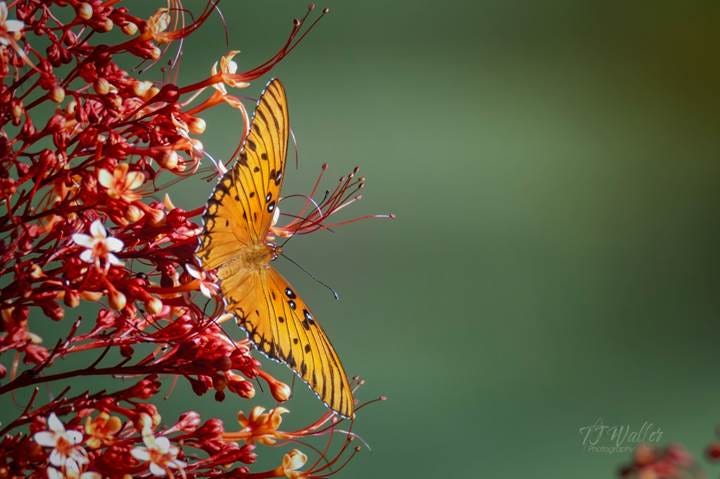
When I’m shooting butterflies there is usually enough light outside (even on cloudy days) to keep my ISO on the Auto setting. If it is really bright outside and there’s a risk of blowing out some of the butterfly’s bright colors, then I’ll dial down my Exposure Compensation (EXP) down to -.03 or -.07.
Aperture
For my students, the subject of “f-stop” is the most difficult to grasp. Going into the details of aperture settings is beyond the scope of this article, but for photographing butterflies, this will depend on how close you are to the butterfly and what you want your depth of field to be. You will want to aim and focus on the butterfly’s head or thorax (it’s back). If you focus on the wings or abdomen (it’s butt) then the head may not be as tack sharp as you would like.
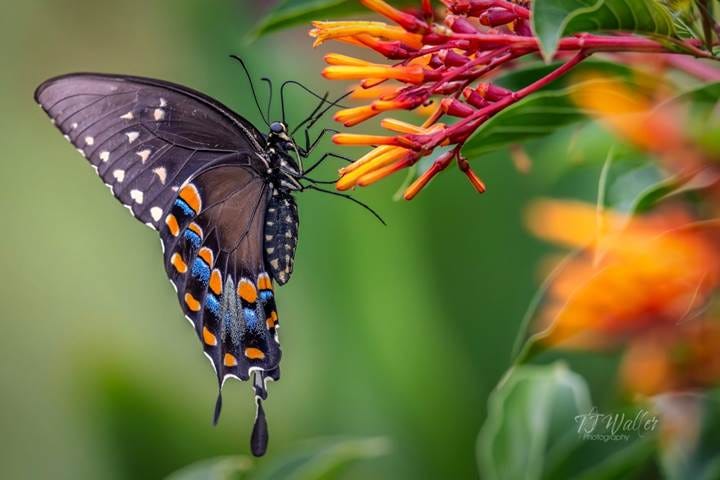
If you are using a fast lens where the aperture is 2.8, 1.8 or faster, then you will want to close it down to f/4 or f/5 depending on how close you are. If you don’t, then you’ll see that the wings will be more out of focus than what you will want. This is definitely trial and error.
I always start with my aperture wide open for my Tamron 150-600mm G2. Wide open at 150mm it will be f/5; at 600mm it’ll be 6.3. With that lens I have to be about six feet away or else it won’t focus at all. With my Tamron 70-200mm 2.8, I get about two feet away and close the aperture to about f/4. But again, it is most definitely trial and error. If I’m 15 feet or further from the butterfly, then no matter the lens, I start with my aperture wide open.
MORE THAN BUTTERFLIES
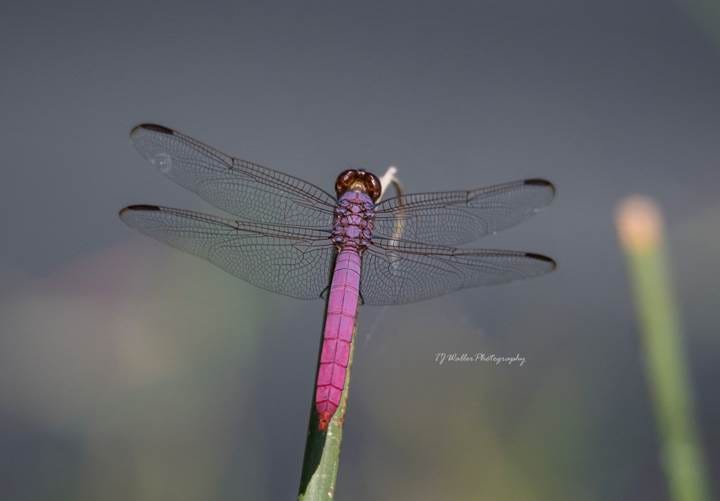
These settings work for more than just butterflies! I use this same technique on dragonflies and other smaller subjects that will sit still long enough to get some nice shots.
Feel free to post any questions you have in the comments as well as any photos you may have taken!
About the Author
TJ Waller is the Founder, Editor-in-Chief, and Lead Photographer of Little Big Florida Echo. With over 50 years behind the lens, TJ is recognized as an elite action photographer specializing in capturing the intensity of professional sports, rocket launches, and frontline environmental reporting. He also operates specialized workshops for photographers looking to master the art of action photography. Visit TJ at his website at TJWallerPhotography.com.
Editor’s Note: This article was originally published September 16, 2024 under the Florida Media Now banner and has been archived here as part of the Little Big Florida Echo legacy collection.
.webp)
.webp)
Comments
Post a Comment